 Julie Drew Where Art Meets Faith
 Empty Sea, Empty Hearts
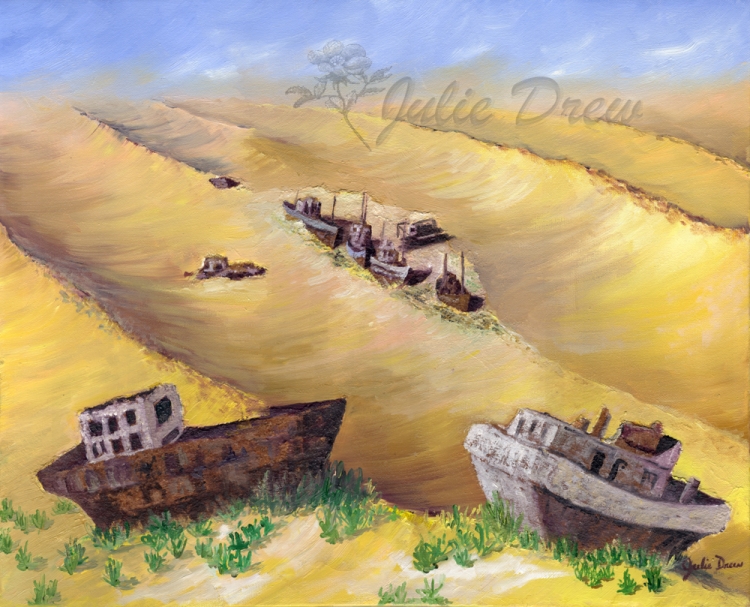
The Story of the Aral Sea epitomises our own thirsty search for water other than the living water.
In 1960, just 50 years ago, the Soviet Union began diverting water from the Aral Sea to grow cotton in a dry climate. Their experiment was successful, producing a cotton industry in Uzbekistan to be the third largest cotton exporter in the world. But it did not come without a cost. The Aral Sea was the fourth largest inland sea in the world and supported many small villages with its fishing industry. As the irrigation continued, the sea dried up and so did the fishing. The land became a desert with blowing dust and salt unleashing a scourge of respiratory diseases in Kazakhstan and Uzbekistan. “In Uzbekistan, although prohibited under the Uzbek constitution, there have been estimates that hundreds of thousands of children are forced by the regime to hand pick cotton during the harvest season with little or no pay... Some children miss up to three months of schooling each year while picking cotton. Those who fail to meet their quotas o r pick poor quality cotton are punished by scolding, beating or detention.” – Environmental Justice Foundation Their industry brings death to the land and the life of the people.
Just as God’s living water brings life to our souls, the waters coming back into the northern part of the sea, now called the North Aral sea is slowly bringing life back with it. “A dam built by the World Bank and Kazakh government is slowly resurrecting a small part of the sea, reviving the fishing industry and bringing hope to an area that some expected would simply dry up and blow away in the fierce, salty winds.
“The miracle is a small one compared with the damage that will probably never be undone. Uzbekistan has chosen to keep the lucrative cotton industry going, and to prospect for gas and oil under the exposed seabed.” -Peter Leonard, the Associated Press.
So often in our world the life that God gives is not enough, we want so much more, and we end up with so much less...
Where is the Rain?
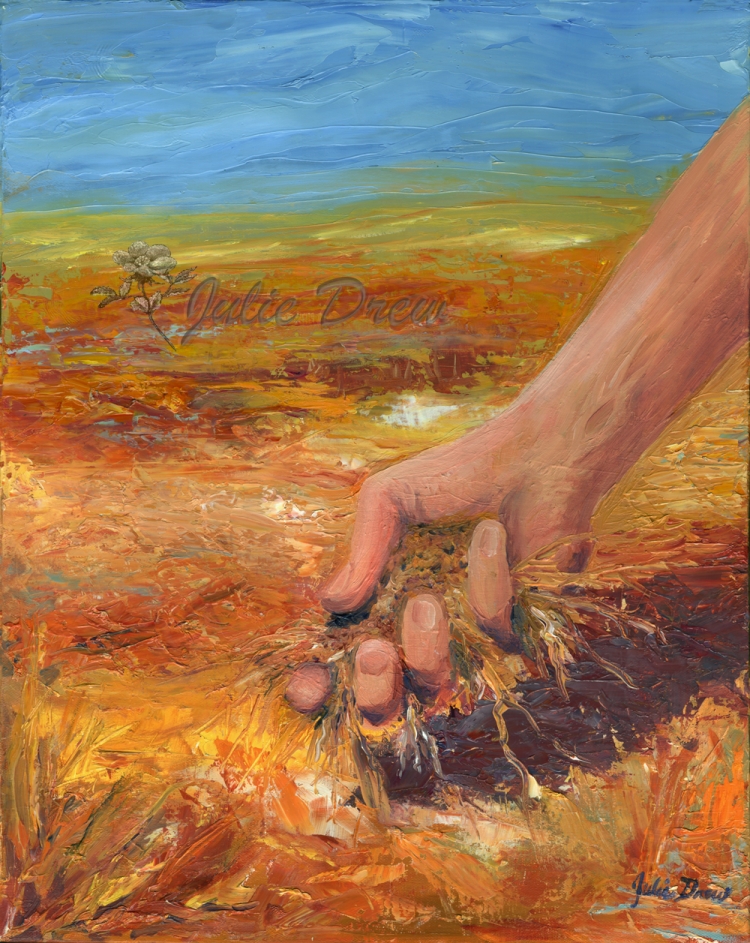
Yesterday, as I was walking across the soccer field in the beautiful sunshine, I noticed how much it looked and felt like August with the grass so dry and prickly. Where is the rain we usually get in May? Alberta is under a fire ban province wide. Although thunderstorms are in the forecast, they may just pass us by. Have you ever seen the rain clouds streaming grey and it stops midway down as if the air is so dry it just soaks up the rain before it reaches the earth?
We aren’t the only dry place where there is supposed to be rain. Our son, Nathaniel, and his friend, Travis are traveling around Southeast Asia and in one of their postings they mentioned a dry waterfalls in Thailand which is supposed to be in monsoon season.
The drought in California has been in the news as well and the repercussion that I noticed has been the doubling price of almonds, from $10 to $19 a bag. I may need to find a new munchie food.
I remember when we moved to Edmonton 18 and a half years ago, May and June were the rainiest months. Our children played baseball and the weather affected the games as we shivered on the sidelines. About 2007 or so I started noticing a change: it was warmer and dryer in the spring and summer and little snow in the winter. That drought lasted about 4-5 years before there was a break. We lost a number of birch and poplar trees in the Edmonton area. The ground was like a sieve and rain just disappeared. Strong winds would come and trees in the ravine would just fall over as if the soil was so dry there wasn’t anything to hold the tree in place.
During the drought years I was working on the Living Water Series and I have continued to add to the series since then. In the series, I was thinking about the scriptures of living water, being thirsty for God and how we often go after other things besides His Living Water. I compared it to the environment and the drought. I was thinking of all that this week again.
Psalm 63:1
O God, you are my God; earnestly I seek you;
my soul thirsts for you;
my flesh faints for you,
as in a dry and weary land where there is no water.
Darkness is not dark to You
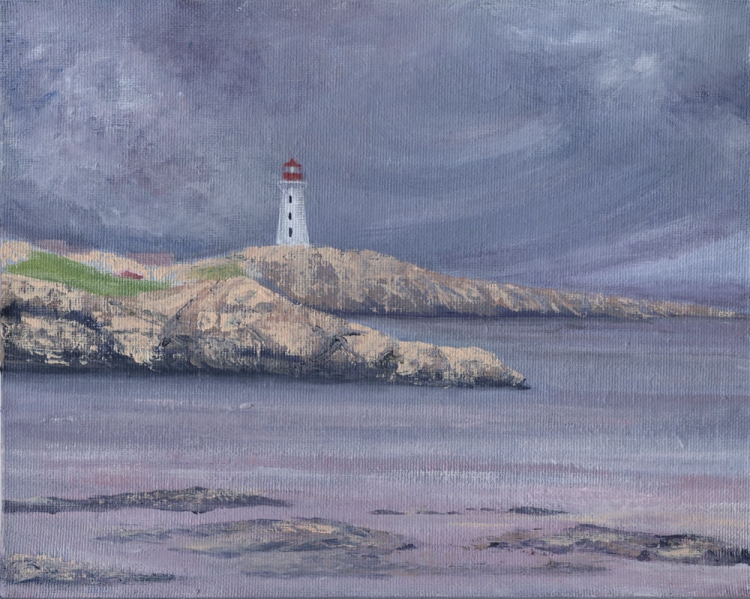
Darkness is not dark to you… Psalm 139:12a
I love reading a good book. A good story hooks me with its plot and makes me invested in its characters. When the titular crisis comes, when I get to the climax, I can feel anxiety building up in me. I often find myself unwilling to put the book down, unable to let go until I know how things will turn out. Sometimes, I will even read ahead just to assure myself that everything will be okay.
Waiting is sitting in the unknown. Life is not a story were we can skip ahead when we feel uncomfortable.
So I make plans and hope and trust that things will work out. If they don’t, I pick myself up and try again. I look for the positive signs around me, like spring breaking forth from winter.
Looking back at the hard times I have faced in my life, I can point to so many instances where I found a silver lining to bolster my spirit. I would cry, express myself in some creative fashion, talk to God and then carry on after finding the hope and trust again.
When I lived in Norway during my third year of University, I went out and bought a guitar so I could sing when my spirit was down. (I was there in Norway learning the folk arts – weaving, wood carving, pottery – as well as sewing, knitting, painting and drawing. Lots of art to process my emotions)
In Chicago, when I was sick with sensitivities for two years, I got up at 4 am to get in painting and a quiet time before my son awoke for the day.
When I went to paint the devastation of the oil sands in Scarred Lands, Scarred Hearts, a butterfly showed up in the painting. 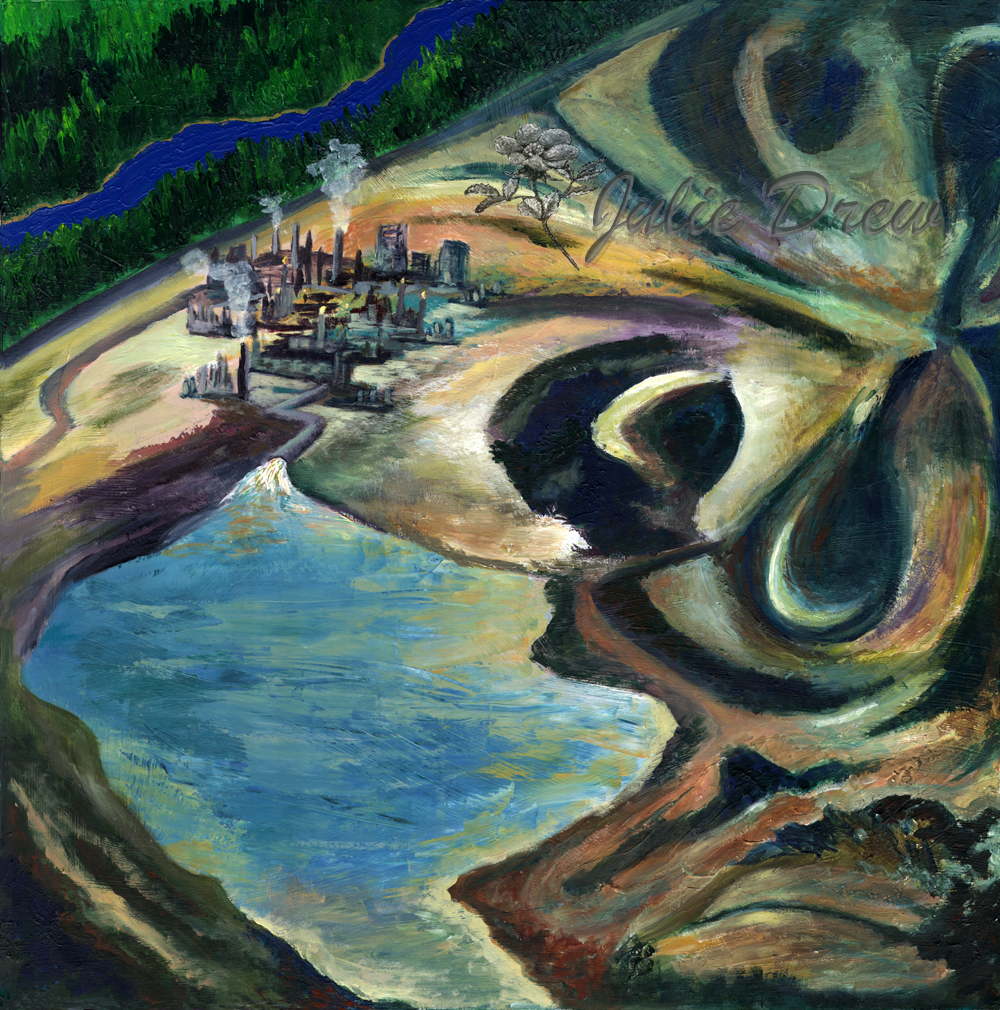
When I was in despair over a tough situation, I painted a rainbow in, Cascade of Hope, Athabasca Falls.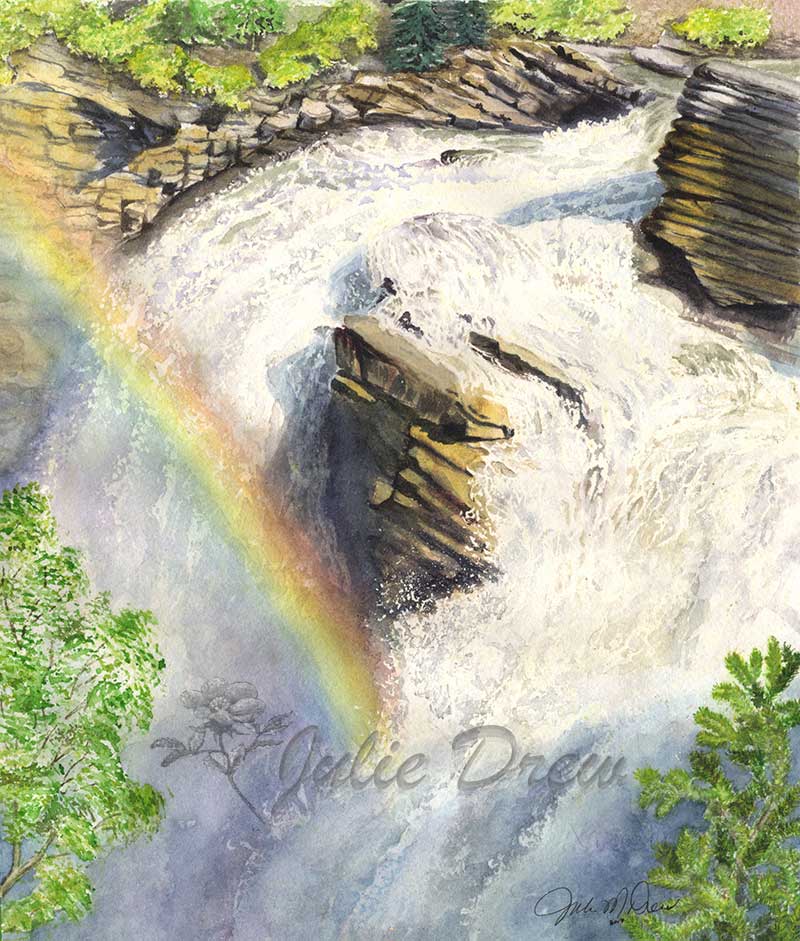
When I got tendonitis in one arm, I overworked my other, because I couldn’t just stop.
I had to learn how take breaks. To appreciate the value of sitting and being present. I have learned much about waiting. I have even learned to ask for help, a bit.
Yet, as I am leading a retreat in Morocco in November which sits on the edge of the Sahara Desert, I have been thinking about the desert. about the darkness, about times like the Holy Saturday (the day between the crucifixion and resurrection): when all is lost, when we are dying of thirst, when we feel abandoned, when all seems without hope, anxiously waiting for the unknown.
Desert:
Absence of God
Shadow of Death
Hardship/trials
Dry/thirsty
Holy Saturday
Waiting in the unknown
In life we cannot read ahead, but I often want to, even feel I need to. I can move on too quickly to Easter, to hope. This can be a disadvantage. Does God have something to show me in the darkness? How do I sit and be present in the desert, the place of darkness and anxiety with my loved ones? Hope is good, and we can find God there, but can we also find him in the darkness?
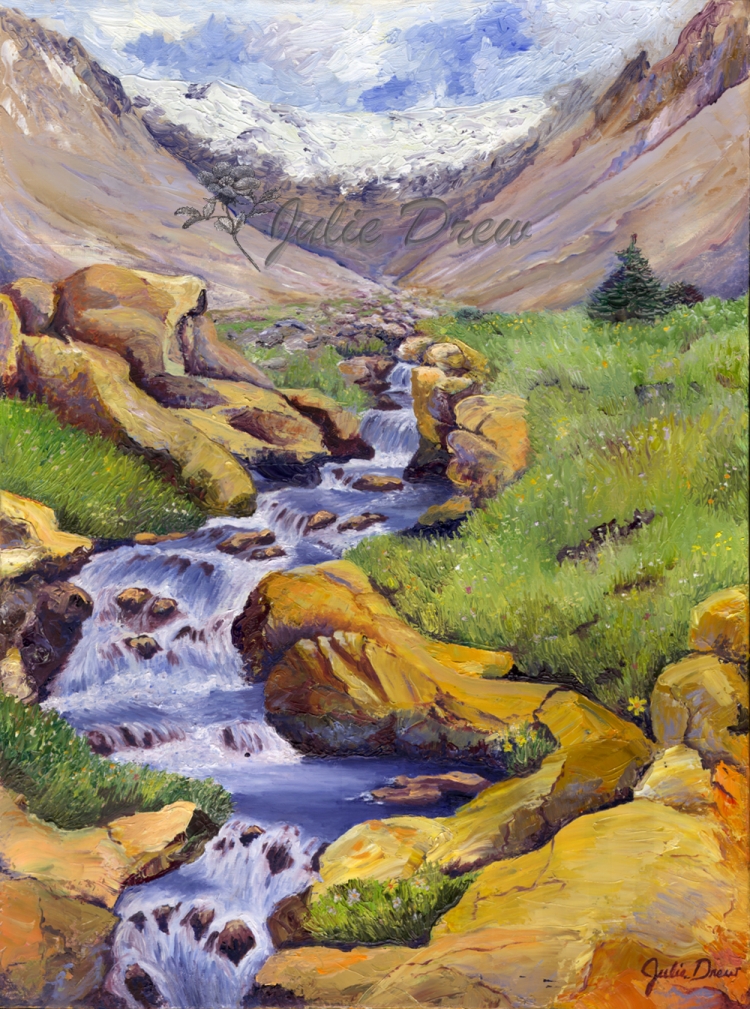
Water
Water
flowing, living,
the essence of life;
we cannot live without it.
We are drawn to it:
the roaring of the surf,
the lapping at the edge of a lake,
cascading down the mountainside,
running and tripping down a river,
a trickling brook.
It delights our hearts,
overflowing us,
washing over us,
reaches down inside our souls,
renewing us.
God is
the living water,
the Spring of Life
in Him we have life.
Come, all who are thirsty
Come and drink.
- Julie
click here for more information on Alpine Meadow, oil panting.
Latest Articles
-
-
-
-

-

-
 We Captured the Essence of the Italian CountrysideWhat an amazing week at Hotel…